DTF vs Sublimation vs Screen Printing vs HTV: Which to Choose
Not sure whether to use DTF, sublimation, screen printing or heat transfer vinyl? Compare fabrics, colours, set-up and order size, then work out cost per piece for your own job.
In this guide 9 sections
Choosing a print method is one of the first real decisions you make when you start printing t-shirts, sportswear or gifts. Get it right and the job runs smoothly. Get it wrong and you end up with faded colours, prints that crack, or a machine that cannot handle the orders you actually receive. This guide compares DTF vs sublimation, and adds screen printing and heat transfer vinyl (HTV), so you can match the method to the job.
We will keep it practical: what each method is, what it prints on, where it shines, where it struggles, and a simple way to work out cost per piece using your own figures.
The four methods in brief
DTF (direct to film)
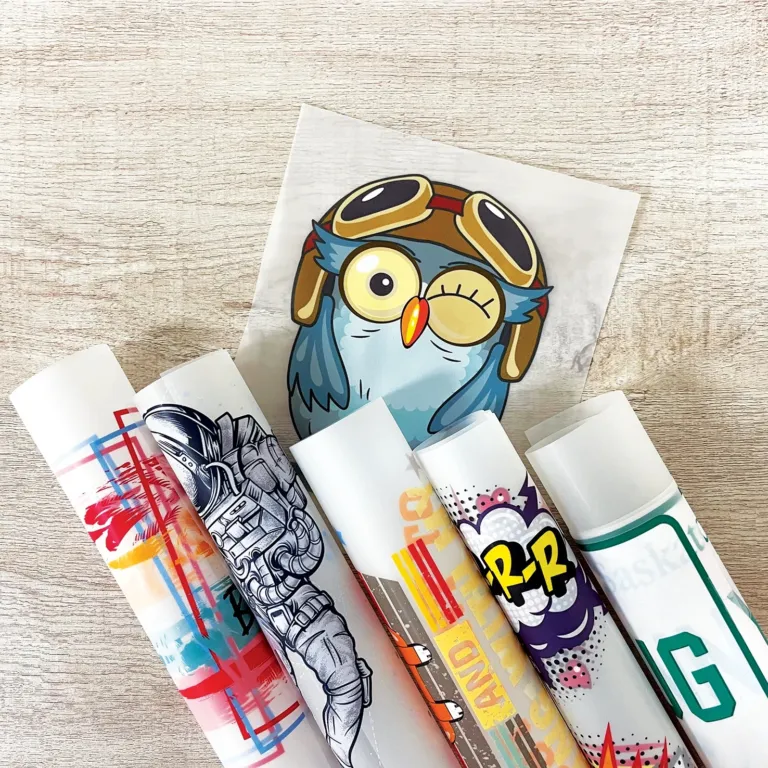
A printer lays colour ink and then white ink onto PET film. Adhesive powder is applied and cured, and the finished transfer is heat-pressed onto the garment. It works on cotton, polyester and blends, in light or dark colours, and a full-colour design costs no more to print than a single-colour one of the same size. Our complete guide to DTF printing explains the process in detail.
Sublimation
Special sublimation ink is printed onto sublimation paper, then heat turns the ink into a gas that bonds with polyester fibres or a polymer coating. The design becomes part of the surface rather than sitting on top, so there is no feel at all on fabric. The catch is that it only works on polyester or polymer-coated items, and on white or light backgrounds, because sublimation has no white ink. It is the standard method for mugs, tiles, photo crystals and similar gifts.
Screen printing
Ink is pushed through a fine mesh screen onto the garment, with one screen for each colour. Setting up the screens takes time and materials, but once they are ready, each extra print is quick. That makes screen printing well suited to large runs of the same simple design, and less suited to small orders, many colours or photographic artwork.
Heat transfer vinyl (HTV)
A cutting plotter cuts your design out of a sheet of coloured vinyl. You remove the unwanted parts (weeding), then heat-press the design onto the garment. HTV is excellent for names, numbers, text and bold shapes, and it comes in special finishes such as glitter, metallic and camouflage. Detailed or multi-colour designs are slow, because each colour is cut, weeded and pressed as a separate layer.
DTF vs sublimation: the key differences
These two are often compared, because both use an inkjet-style printer and a heat press, and both handle full-colour designs. The difference is mainly about the material you are printing on.
| Question | DTF | Sublimation |
|---|---|---|
| Cotton t-shirts? | Yes | No (needs polyester or a coated surface) |
| Dark garments? | Yes, thanks to white ink | No, best on white or light colours |
| Feel on fabric | Thin, flexible layer on the surface | No feel; ink is inside the fibres |
| All-over prints | Not practical | Well suited to white polyester |
| Mugs, tiles, crystals, rocks | Not the usual method | Yes, on sublimation blanks |
| Consumables | Film, white and colour ink, powder | Sublimation ink, paper, heat tape |
A simple rule: if the item is cotton or dark, choose DTF. If it is white polyester sportswear or a hard gift item made for sublimation, choose sublimation.
All four methods side by side
| Factor | DTF | Sublimation | Screen printing | HTV |
|---|---|---|---|---|
| Fabrics | Cotton, polyester, blends | Polyester, coated items | Most fabrics | Most fabrics (check the vinyl type) |
| Dark garments | Yes | No | Yes | Yes |
| Full colour and photos | Yes | Yes | Difficult | Not practical |
| Set-up per design | Low | Low | High (screens per colour) | Low for simple designs |
| Best order size | One piece to medium runs | One piece to medium runs | Large runs of one design | Small runs, personalisation |
| Main equipment | DTF printer or bought transfers, heat press | Sublimation printer, heat press | Screens, frames, inks, drying | Cutting plotter, heat press |
Which method suits which job
Here are some common Sri Lankan orders and the method we would normally point people towards.
- Inter-house sports meet t-shirts in four dark colours, with a full-colour crest: DTF. The same transfer works on every house colour.
- Cricket or netball club jerseys in white polyester, printed all over: sublimation, as long as the fabric is suitable polyester.
- Player names and numbers on the back of team kits: HTV, which is quick for text and numbers and easy to personalise one shirt at a time.
- Several hundred identical one-colour t-shirts for a company event: get a screen printing quote and compare it against DTF. At that volume, screen printing is often competitive; for mixed sizes, colours or designs, DTF stays simpler.
- Photo mugs for Mother’s Day or Avurudu gifts: sublimation on sublimation mugs.
- A small clothing brand testing ten designs on cotton: DTF, because you can print a few of each without any set-up cost per design.
- Glitter or metallic text on a birthday t-shirt: HTV in a special finish.
How to compare cost per piece for your job
We cannot give you one “cheapest method”, because it depends on your volume, your design and your quotes. What you can do is compare methods using the same formula:
Cost per piece = (set-up cost ÷ number of pieces) + print cost per piece + blank cost per piece + your time and packaging per piece
Set-up cost is what matters most. It is close to zero for DTF transfers you order, but screens for screen printing add a cost for every colour, and that cost is spread across the whole run. Small runs make it expensive per shirt; large runs make it small.
Worked example using DTF
You need 25 cotton t-shirts, each with a full-colour front design that fits inside 11″ × 16″. At the time of writing, our A3 DTF sheets are LKR 450 each.
- Set-up: none.
- Print: 25 × LKR 450 = LKR 11,250, or LKR 450 per shirt.
- Blank: your quote per shirt.
- Time and packaging: your own figure per shirt.
To compare with screen printing, ask a screen printer for their price per shirt and their screen or set-up charge for the number of colours in your design, then put both into the same formula. Prices change, so check our DTF printing page for today’s rates.
What equipment each method needs
If you are planning to do the work yourself, this is what to budget for. We supply equipment for DTF, sublimation and HTV; machine prices are quoted on the day because they move with the exchange rate.
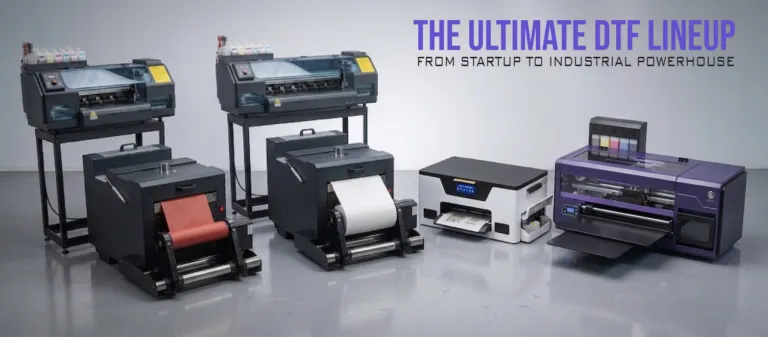
- DTF: a heat press is enough if you buy transfers. To print your own, you also need a DTF printer plus film, white ink, colour ink and adhesive powder from our DTF printing consumables range.
- Sublimation: a sublimation printer such as the Epson L1800 A3 sublimation model, sublimation paper and tape, a flat-bed press for fabric and flat items, and a mug press for mugs.
- Screen printing: screens, frames, squeegees, inks and a way to dry or cure the prints. We do not supply screen printing equipment.
- HTV: a cutting plotter, weeding tools, and heat transfer vinyl in the colours and finishes you need.
A good flat-bed heat press is shared by DTF, sublimation on fabric and HTV, so it is usually the first machine to buy. Our starter packages group the right equipment together for custom t-shirts, mugs and gifts, and vinyl work.
Can you combine methods?
Yes. One practical set-up is DTF for full-colour fronts, HTV for names and numbers on the back, and sublimation for mugs and photo gifts, all using the same heat press for fabric work. Start with the method that matches most of your orders, then add a second one when customers keep asking for something your first method cannot do well.
If you are weighing up where to begin, read our guide on starting a t-shirt printing business on a small budget.
Frequently asked questions
Can I use sublimation on cotton t-shirts?
Not directly. Sublimation ink bonds with polyester fibres or polymer coatings, so on 100% cotton the print washes out. For cotton, DTF or HTV is the better choice.
Is DTF or sublimation better for a small business?
It depends on what you sell. DTF suits cotton and dark t-shirts, while sublimation suits white polyester garments and gift items such as mugs, tiles and photo crystals. Many businesses end up using both.
When does screen printing make more sense than DTF?
Screen printing becomes worth comparing for large runs of the same design with only a few colours, because the screen set-up cost is spread across many pieces. For small or mixed orders, DTF is usually simpler.
Which method is best for names and numbers on sports kits?
HTV is a popular choice, because a cutting plotter can cut each name and number quickly and you can personalise one shirt at a time. DTF gang sheets are another option when names need several colours.
Talk it through with us
If you are still unsure which method suits your orders, send us a message on WhatsApp at 077 762 8679 with a photo of the item and a rough quantity, or visit our showroom at 382 Galle Road, Colombo 06, to watch the equipment run before you decide.